
Nature and more strives to continually increase transparency, mutual awareness and shared responsibility of all stakeholders in the food supply chain with regards to food quality, ecology and social justice.

navigate sustainability here

*
*
*

Pineapple

Pineapple

Product Description

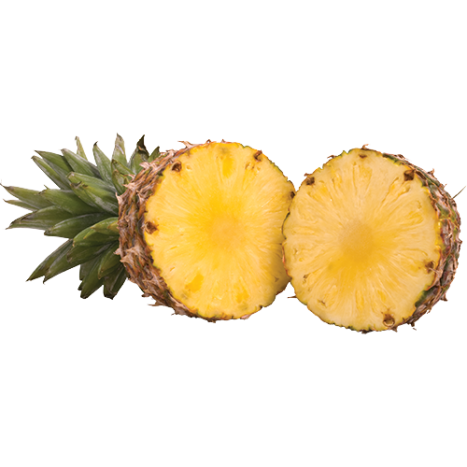
The pineapple (Ananas comosus) is a tropical plant and fruit. The name ‘pineapple’ comes from the similarity of the fruit to a pine cone. It is also known as Piña, Nanas and Ananas. Ananas comes from 'anana' which is a South American word for 'excellent fruit'.

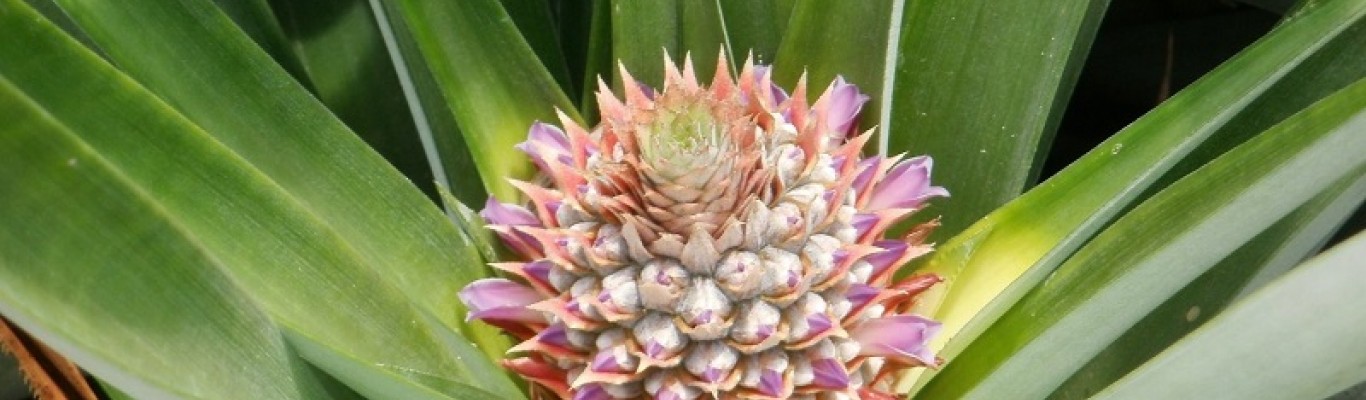
The fruit grows on a mother plant in a rosette with pointed leaves about 30–100 cm long, the leaves surrounding a thick stem. The first year the plant produces the leaves and the second year a flowering stalk arises from the centre. Pineapple is the only Bromeliad fruit in widespread cultivation. Bromeliad is a large family of flowering plants that are drought-tolerant. Pineapple can be grown on eroded land in dry areas with little or no irrigation. Pineapple planted on degraded lands helps to reduce soil erosion and thereby environmental degradation.

The crowns are planted in soil to grow new pineapple plants. It takes about 18 months from planting to harvesting to produce a ripe pineapple fruit. The pineapple fruit must be harvested just at the right time; once harvested, it softens as it ripens but it does not get any sweeter. Each plant produces one pineapple fruit in its life.

The pineapple fruit has vitamins, minerals, fibre and enzymes that are very beneficial for the digestive system and help in maintaining ideal weight and balanced nutrition. Pineapples are a good source of Vitamin C.

History

The pineapple is native to southern Brazil and Paraguay where many wild relatives still occur. It was spread by the Indians up through South and Central America to the West Indies as the result of centuries of Indian migration and commerce. In 1493 Columbus found the fruit on the island of Guadaloupe and introduced it into Spain; from there, pineapples were spread around the world on sailing ships. The transportation of the fruit was, and still is, a difficult issue as the product is very delicate and starts to ripen right after harvest. At that time the ability to have a pineapple for an important dining event said as much about the rank of the hostess as it did about her resourcefulness, as the pineapple was too delicate to ship from the Caribbean to USA or Europe. Only the speediest ships and best weather conditions could deliver ripe, undamaged, healthy pineapples to the luxury dinners of privileged people.

Nutrition Information

Serving size: 100 grams
Calories: 58
Protein: 0.5 grams
Fat: 0.2 grams
Carbohydrate: 13.5 grams


kilocalorieën

58

kcal


Natrium

2,0

mg

Water

82,5

g


Kalium

170,0

mg

Eiwit

0,5

g


Calcium

16,0

mg

Koolhydraten

13,5

g


Fosfor

9,0

mg

Suikers

12,4

g


Magnesium

-

mg

Vet

0,2

g


IJzer

0,0

mg

Verzadigd

0,0

g


Koper

0,0

mg

Cholesterol

0,0

mg


Zink

0,0

mg

Vezels

1,4

Use Tips

Some chefs advise slicing off the green leafy top and standing the pineapple upside-down on the cut end for half an hour. This lets the sweeter juices on the bottom travel to permeate the rest of the fruit for a sweeter overall end product.

The tough core that is usually discarded or pressed for juice can also be sliced lengthwise and used as stirrers for fruit drinks.


Meet our Pineapple growers.

Bio Exotica

Bio Exotica
Ghana

Corsicana

Corsicana
Costa Rica

Ecopiñas del Arenal

Ecopiñas del Arenal
Costa Rica